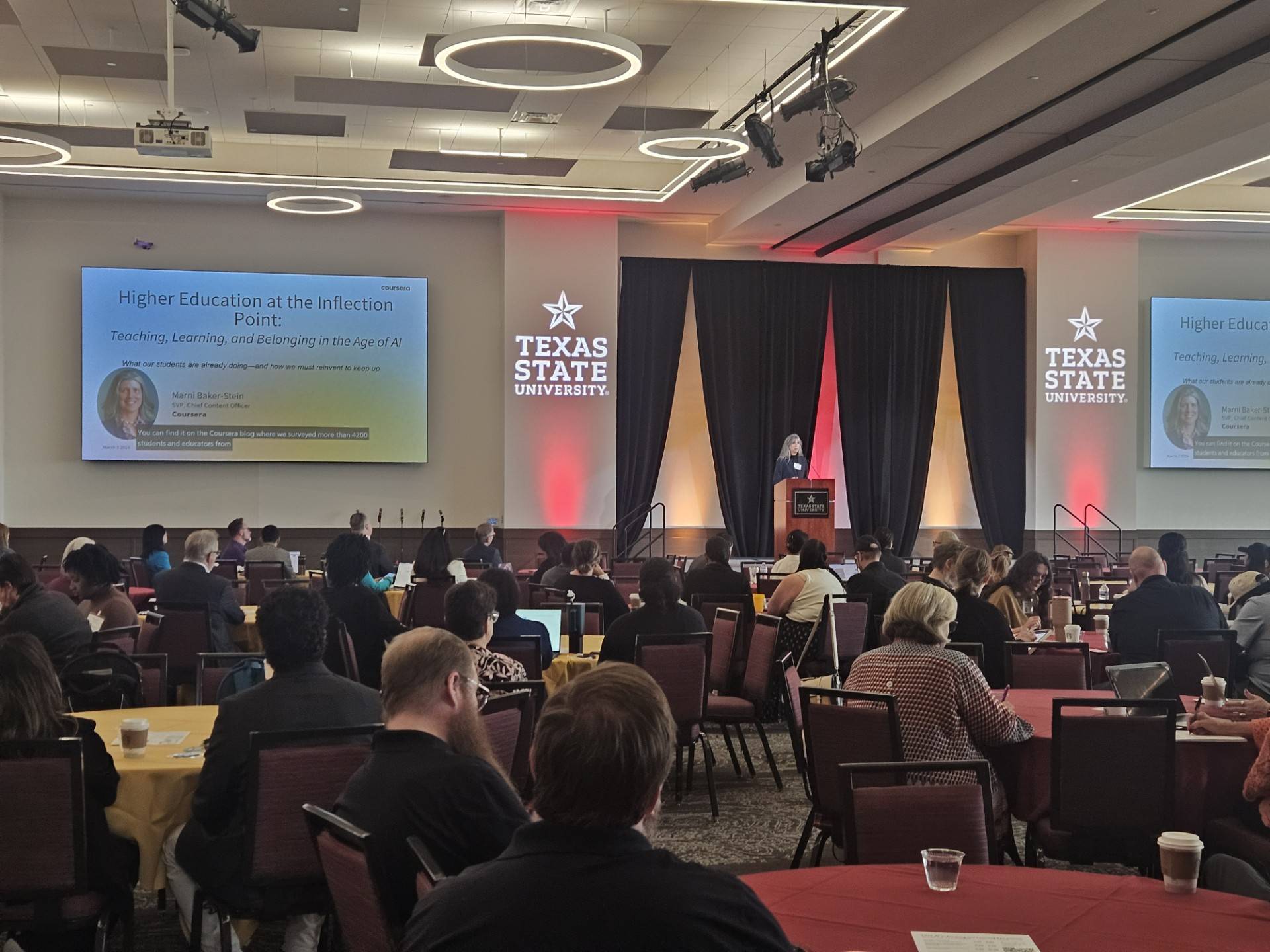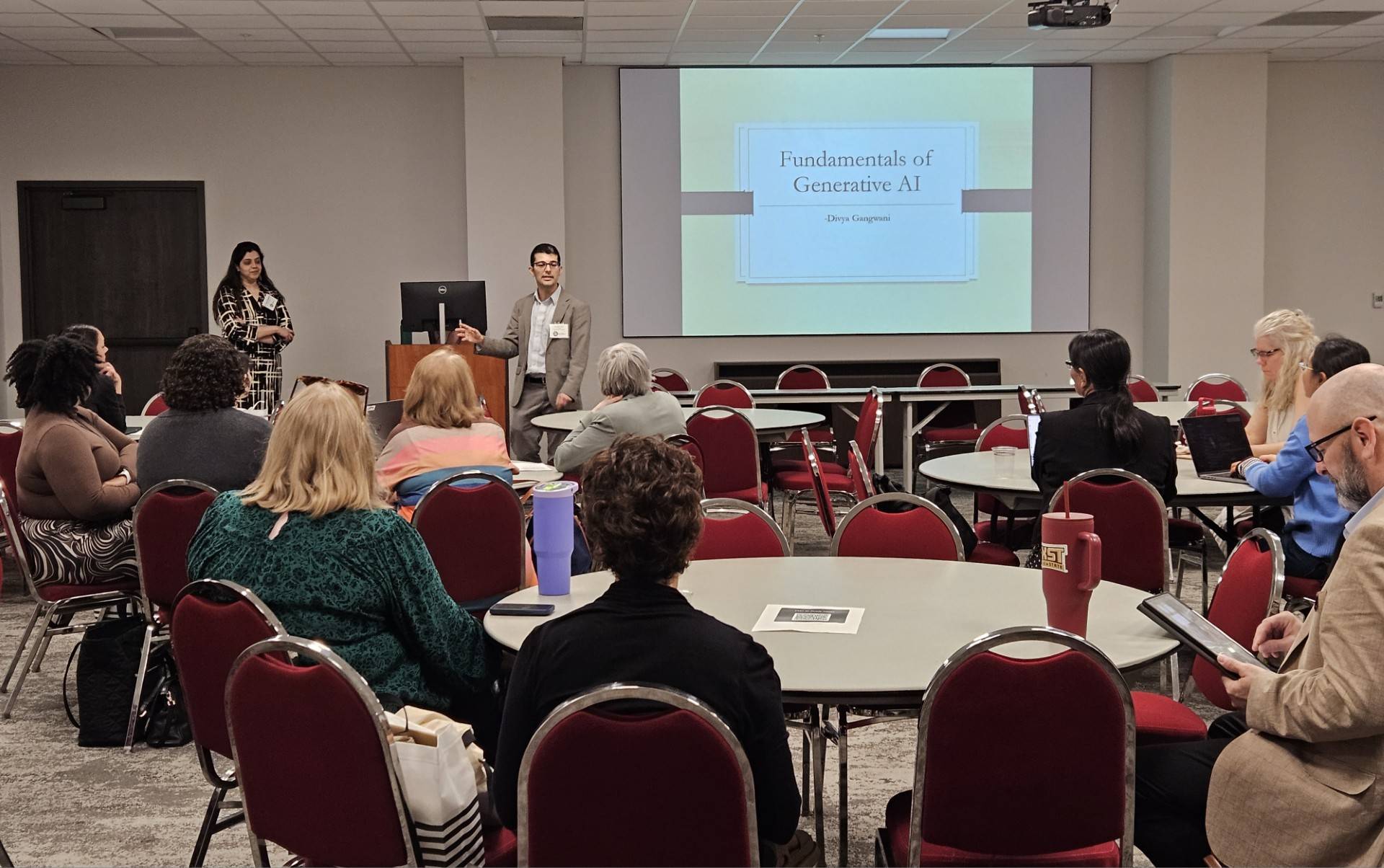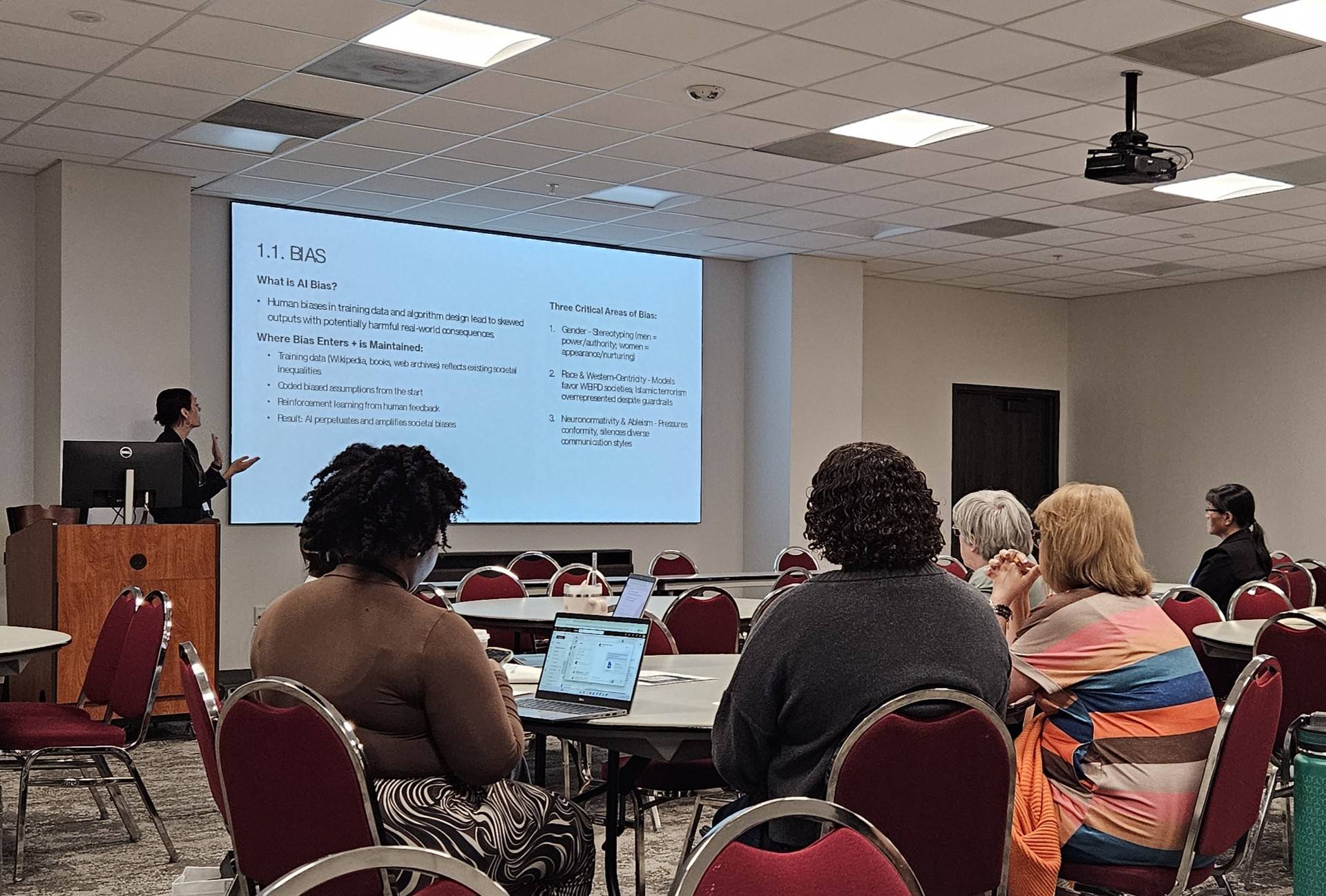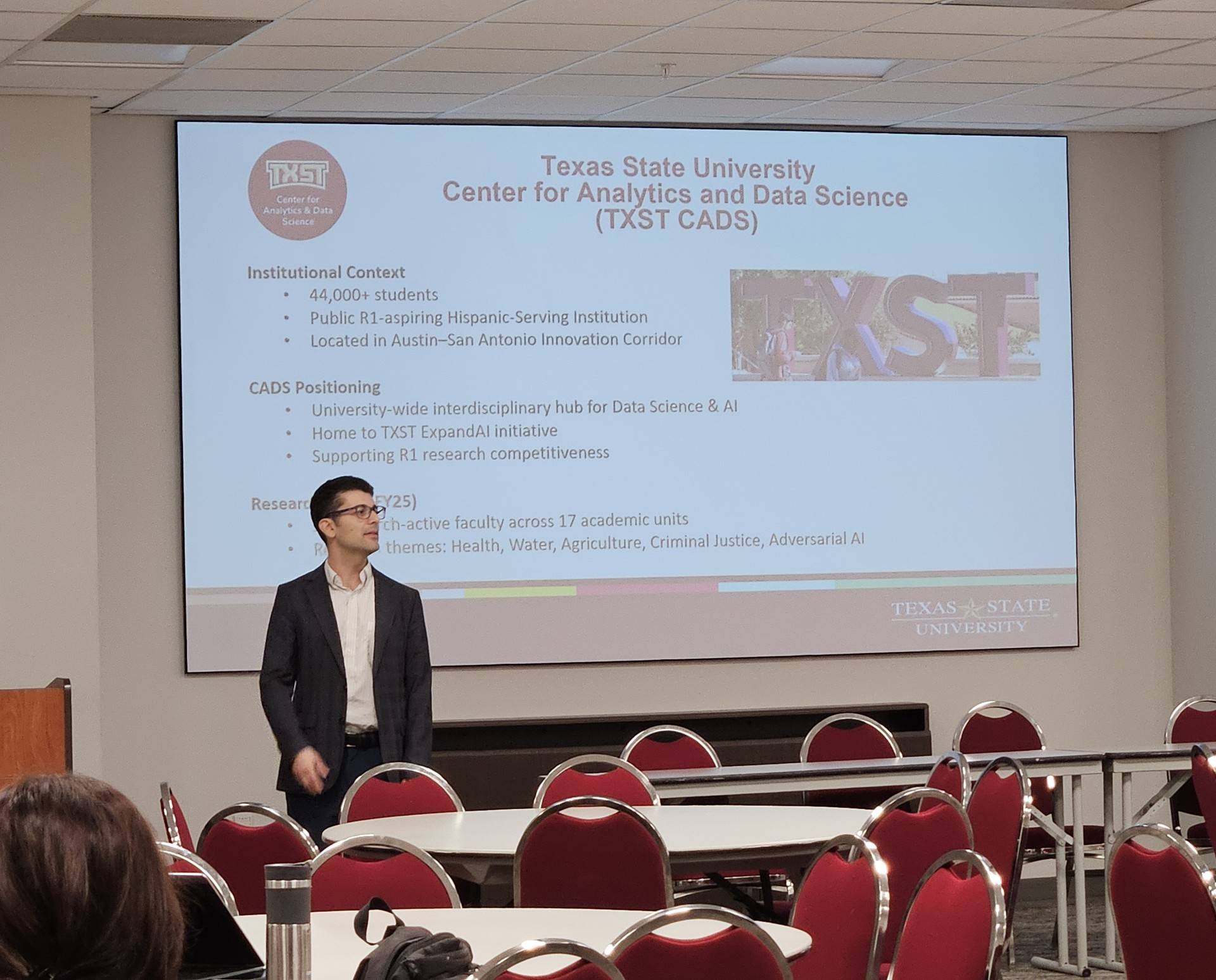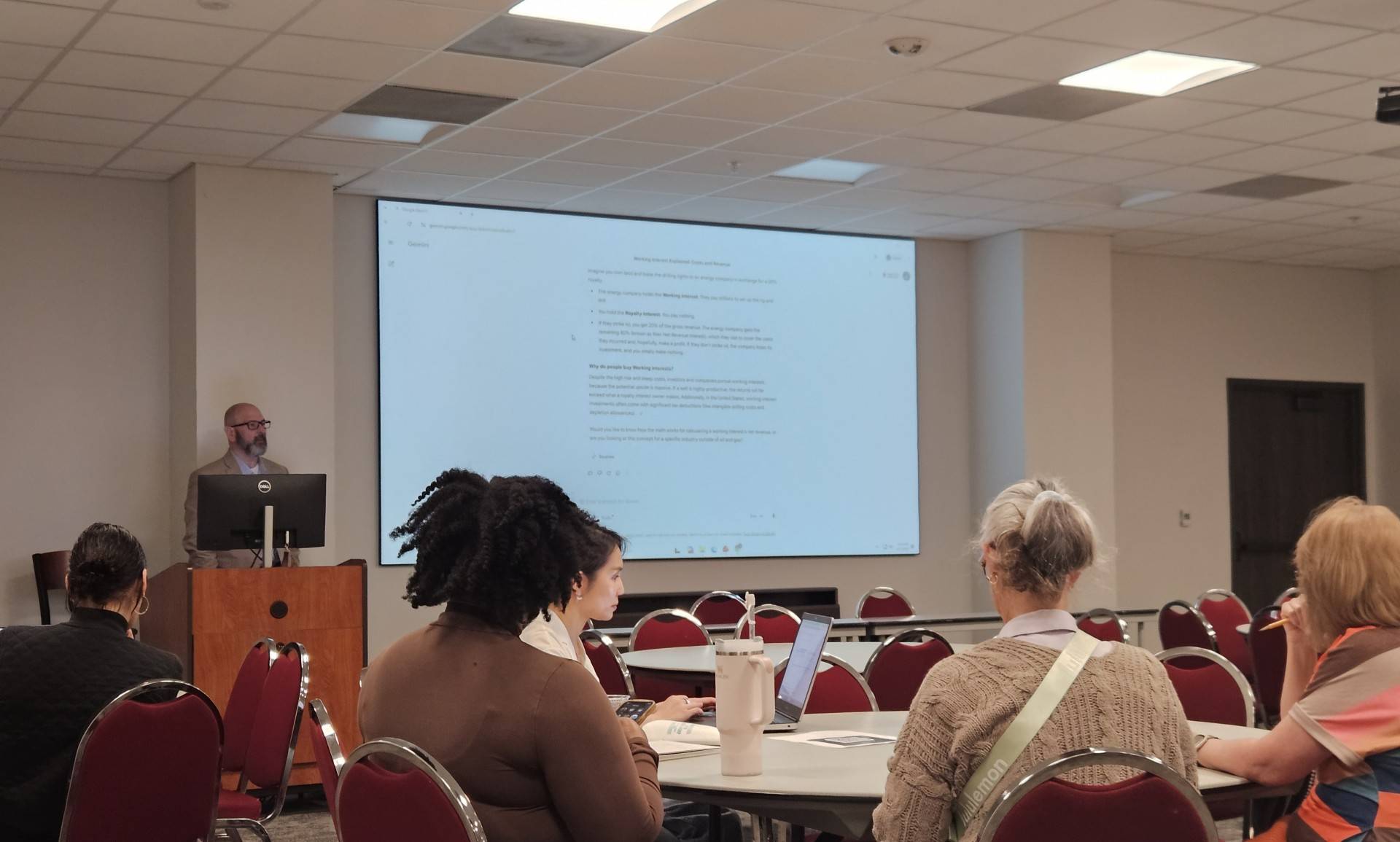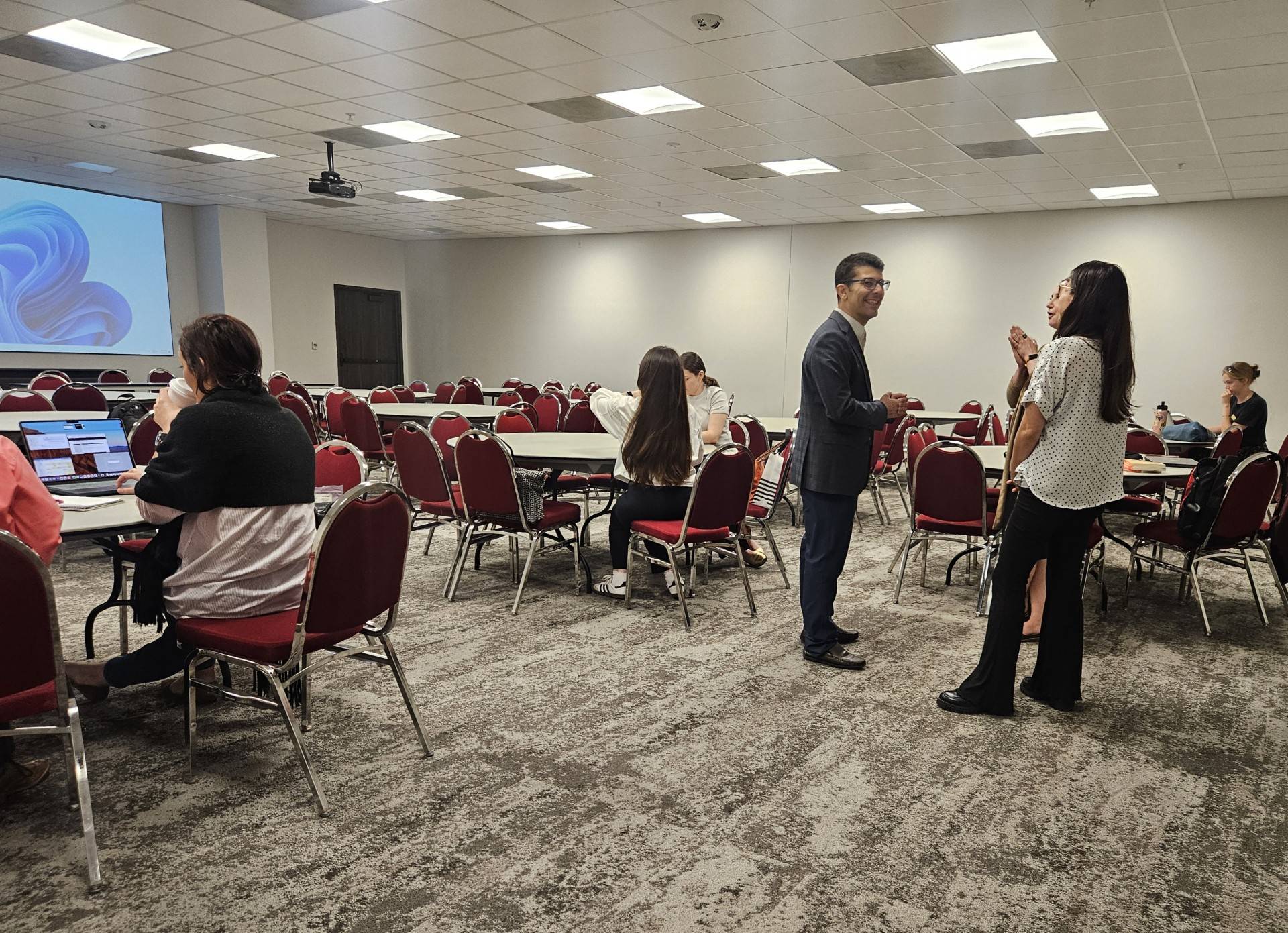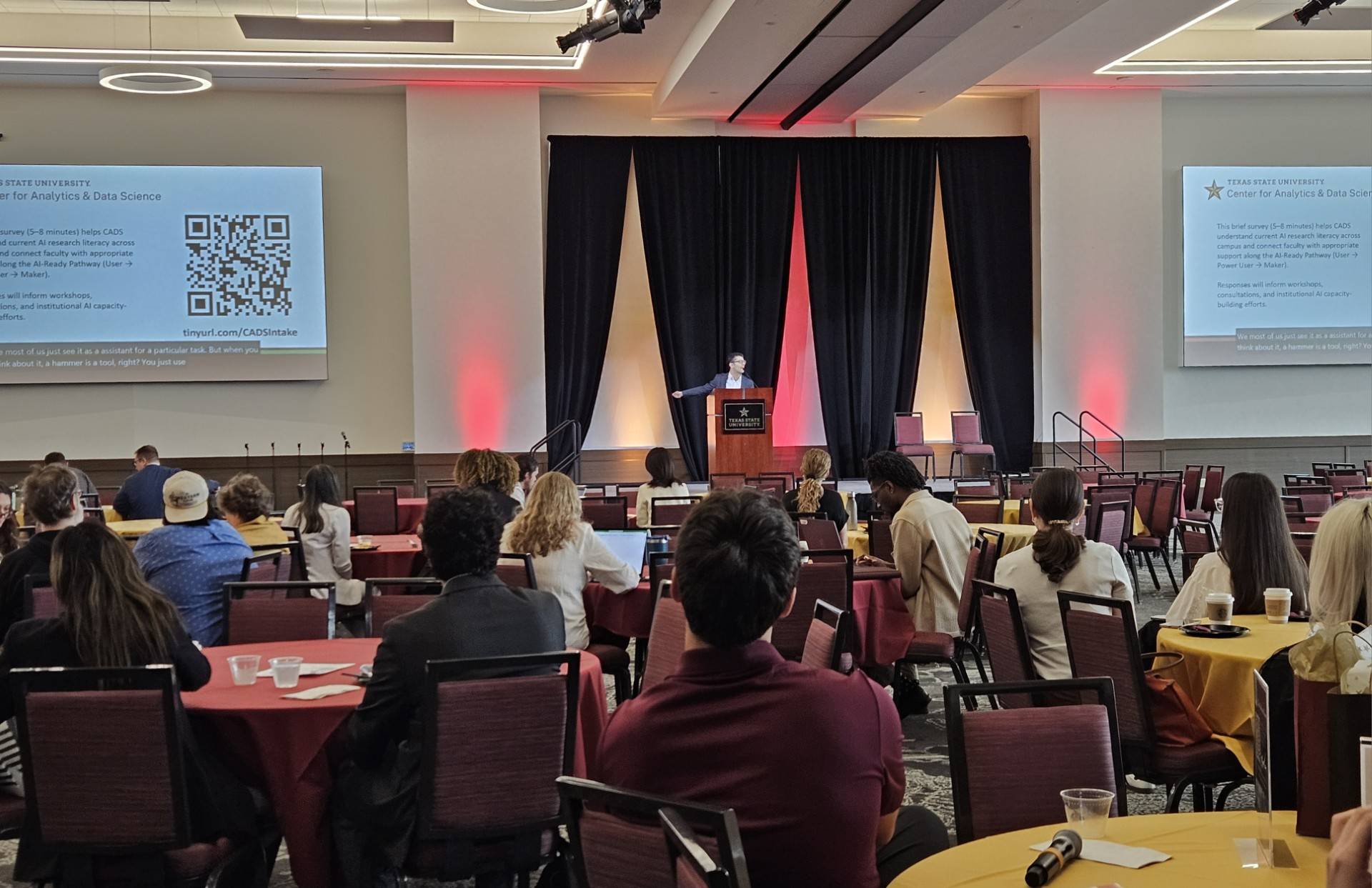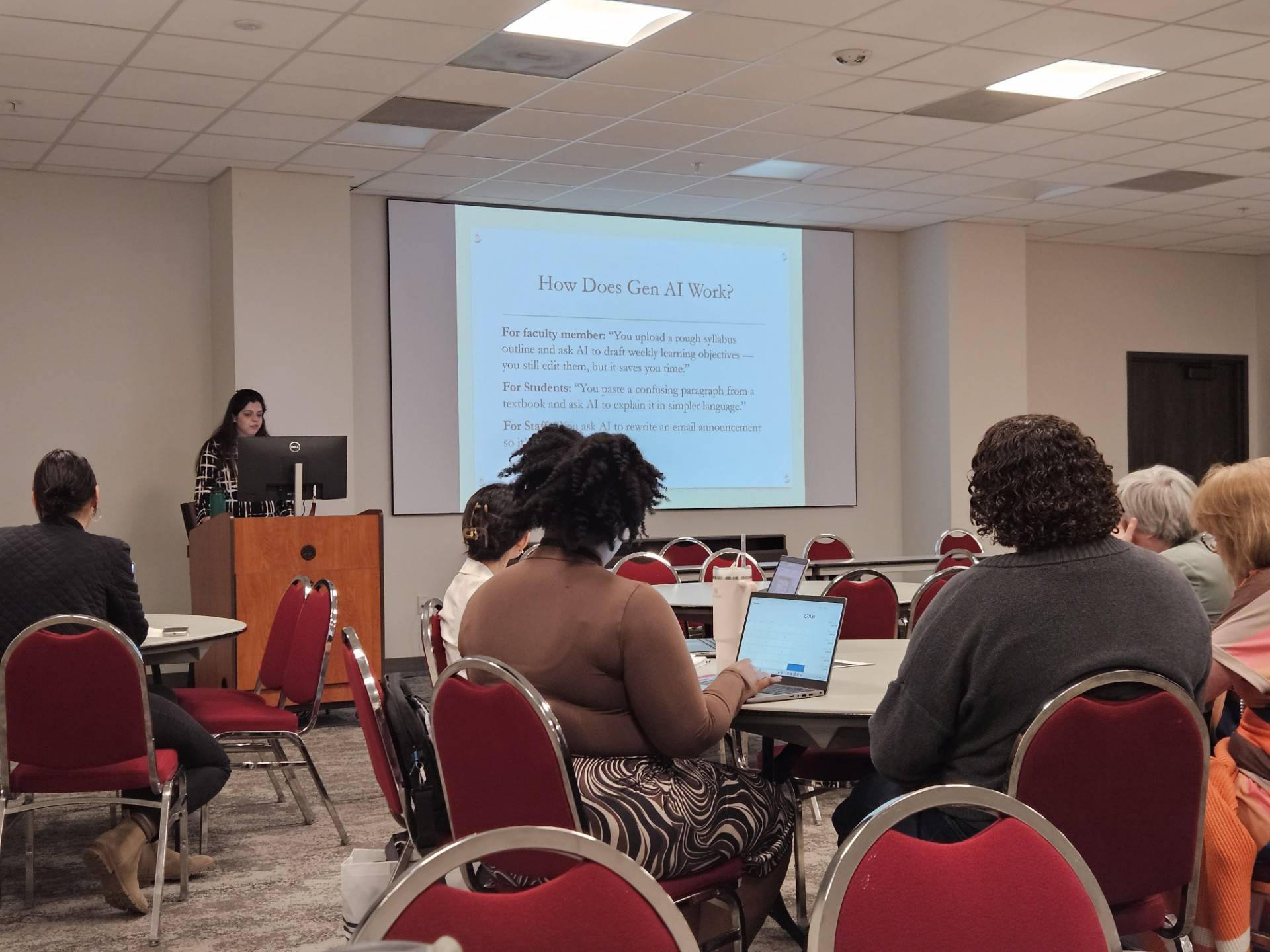

Hosted collaboratively by Information Technology, Faculty Success, and CADS, the two‑day event brought together faculty, staff, students, and industry partners to explore practical and responsible approaches to artificial intelligence in higher education.
The symposium emphasized the university’s commitment to an “AI‑forward” academic environment and highlighted TXST’s dedication to preparing the campus community for the opportunities and challenges AI presents in learning and research. Keynotes from Coursera Chief Content Officer Marni Baker Stein and representatives from multiple institutes provided national insight into the evolving role of AI in curriculum design, student support, and workforce readiness. Industry partners, including Google and Oracle, contributed additional perspectives through workshops and demonstrations throughout the event.
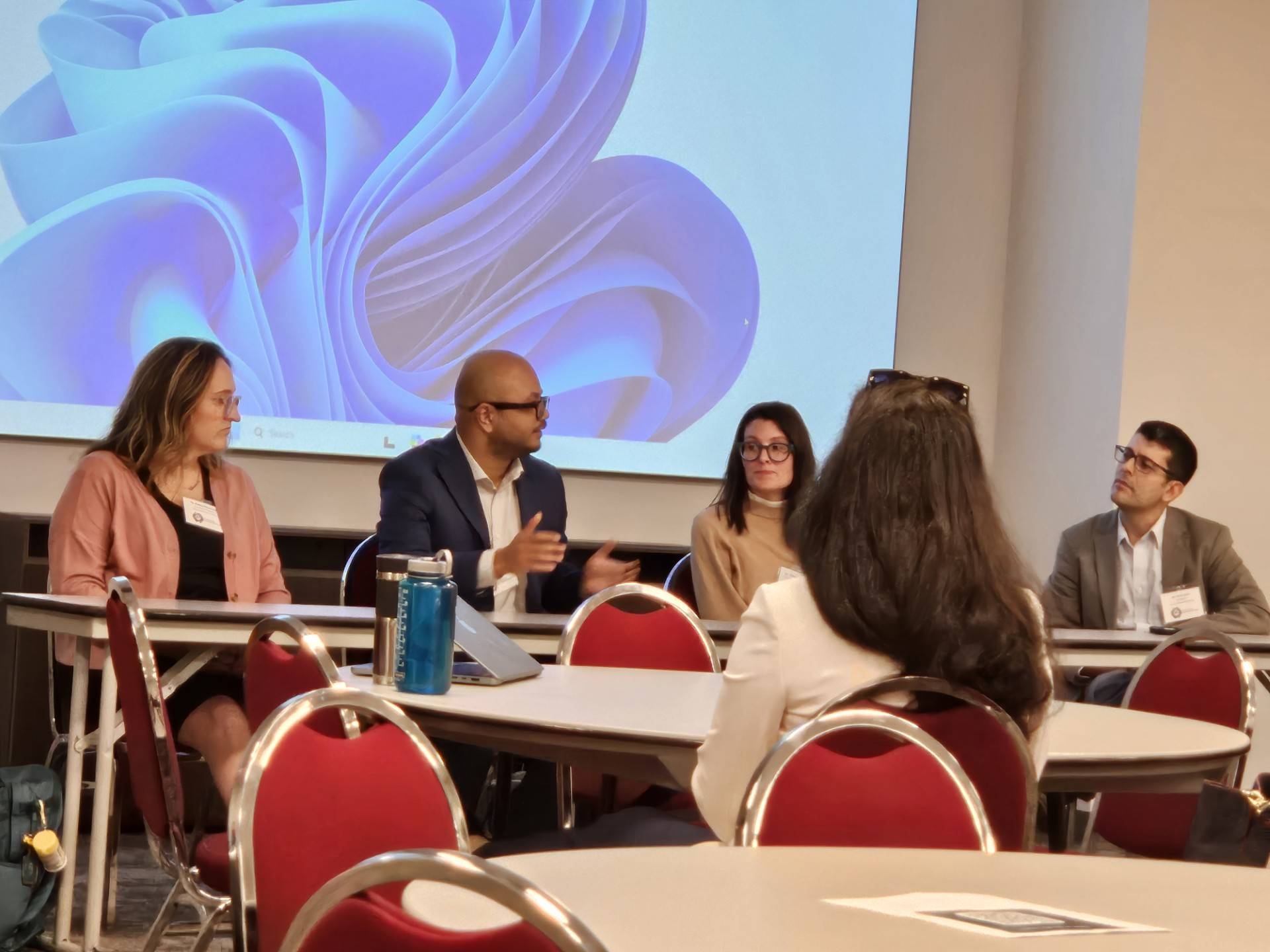
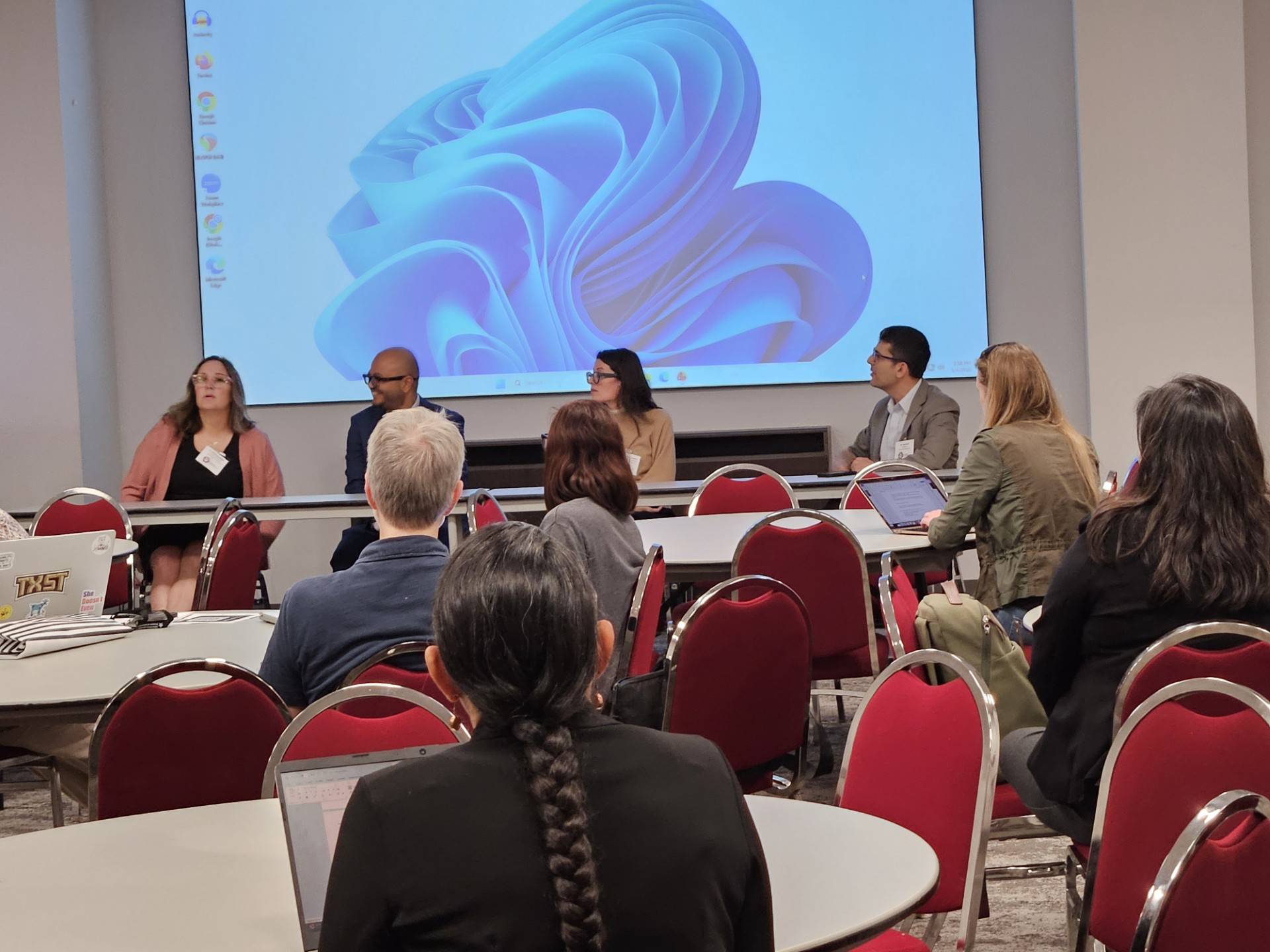
CADS is honored to have contributed to the program through active participation, support, and facilitating several sessions throughout the symposium. A key highlight was the CADS‑led panel, “How Early Career Faculty Use AI Tools for Research,” held on March 4. The session featured several junior faculty discussing how generative AI is shaping their research processes, from data analysis and literature synthesis to project development and interdisciplinary collaboration. The panel emphasized responsible use, methodological transparency, and the growing need for AI‑supported research literacy across academic disciplines. Their perspectives reinforced the importance of preparing students for an AI‑enabled workforce and the evolving landscape of scholarship.
During both days, CADS staff and affiliated researchers engaged with attendees in sessions focused on AI‑guided research strategies, available TXST tools, and classroom integration. On day two, founding CADS Director Dr. Tahir Ekin offered welcoming remarks and emphasized the need to work with AI rather than against it as well as the responsibility to utilize the technology responsibly. Breakout sessions across the symposium showcased innovative approaches to course design, workplace applications, ethical considerations for generative AI, and strategies for aligning classroom learning with real‑world needs.
As Texas State continues to invest in AI literacy, innovation, and research excellence, CADS remains committed to supporting faculty, staff, and students in leveraging AI for ethical, responsible, and impactful work. The center looks forward to continued collaboration and to building on the momentum generated by this year’s symposium.